What is Subscription-Based Software
January 2017 changed everything about how I bought software. Adobe announced that Photoshop would no longer be available for $999 upfront. Instead, they wanted $20 monthly forever. I was furious. That anger lasted exactly…

January 2017 changed everything about how I bought software. Adobe announced that Photoshop would no longer be available for $999 upfront. Instead, they wanted $20 monthly forever. I was furious. That anger lasted exactly three months until I realized subscription software had completely transformed my business economics. The upfront cost to access professional tools dropped from $3,000 to $60 monthly. Updates arrived automatically. New features appeared without expensive upgrade purchases. My hatred turned into appreciation when I calculated how much money subscriptions actually saved me.
Subscription-based software is a licensing model where customers pay recurring fees monthly or annually to access cloud-hosted applications instead of purchasing perpetual licenses. Users access software through the internet and receive continuous updates, support, and new features as part of their subscription. This model has replaced traditional software purchasing across nearly every industry. The subscription economy reached $492 billion in 2024 and is projected to hit $1.5 trillion by 2033, growing at 13.3 percent annually. Software and technology represent the fastest-growing segment within subscriptions, expanding at 15.8 percent yearly. This shift fundamentally changed how companies build and sell software products.
How Subscription Software Actually Works
Subscription software operates through cloud-based delivery systems. Companies host applications on their servers. Customers access these applications through web browsers or dedicated apps. No installation disks. No manual updates. No version compatibility nightmares.
Microsoft 365 demonstrates this model perfectly. You pay $9.99 monthly for Word, Excel, PowerPoint, and Outlook delivered through the cloud. Microsoft handles all updates automatically. New features appear in your applications without any action required from you.
I switched from desktop Office 2010 to Microsoft 365 in 2018. The difference was staggering. My old version never received updates. Security patches required manual downloads. New features meant buying entirely new software versions for $399 every few years.
The subscription version updates constantly. Microsoft added AI writing assistance in 2023. Real-time collaboration appeared automatically. Cloud storage integration just worked one day without me doing anything. These improvements would have cost thousands under the old perpetual licensing model.
Understanding Different Subscription Software Models
Fixed Subscription Pricing
Fixed subscriptions charge the same amount regardless of usage. Netflix costs $15.49 monthly, whether you watch one movie or one hundred. Spotify Premium runs $10.99 monthly for unlimited music streaming. This model dominated 48.1 percent of the subscription market in 2024.
Adobe Creative Cloud uses pure fixed pricing. Individuals pay $54.99 monthly for access to Photoshop, Illustrator, Premiere Pro, and twenty other applications. Use them daily or occasionally, the price stays the same. Companies love this predictability for budgeting purposes.
I prefer fixed subscriptions for tools I use frequently. My Microsoft 365 subscription costs $99.99 annually. That breaks down to $8.33 monthly for Word, Excel, PowerPoint, Outlook, OneDrive storage, and Teams. The value becomes obvious when I use these tools daily.
Usage-Based Subscription Models
Usage-based subscriptions charge according to consumption. Amazon Web Services bills per computing hour used. Twilio charges per SMS sent or API call made. This model grew 126 percent year over year, with 79 companies now offering credit-based systems.
Stripe exemplifies usage pricing perfectly. They charge 2.9 percent plus $0.30 per successful transaction. Process $10,000 monthly and pay $320. Process $100,000 and pay $2,930. Revenue scales directly with customer success, aligning incentives beautifully.
Usage models work brilliantly for variable consumption patterns. I use SendGrid for email delivery. Some months, I send 5,000 emails. Other months require 50,000. Paying only for actual usage saves thousands compared to fixed enterprise pricing.
Tiered Subscription Structures
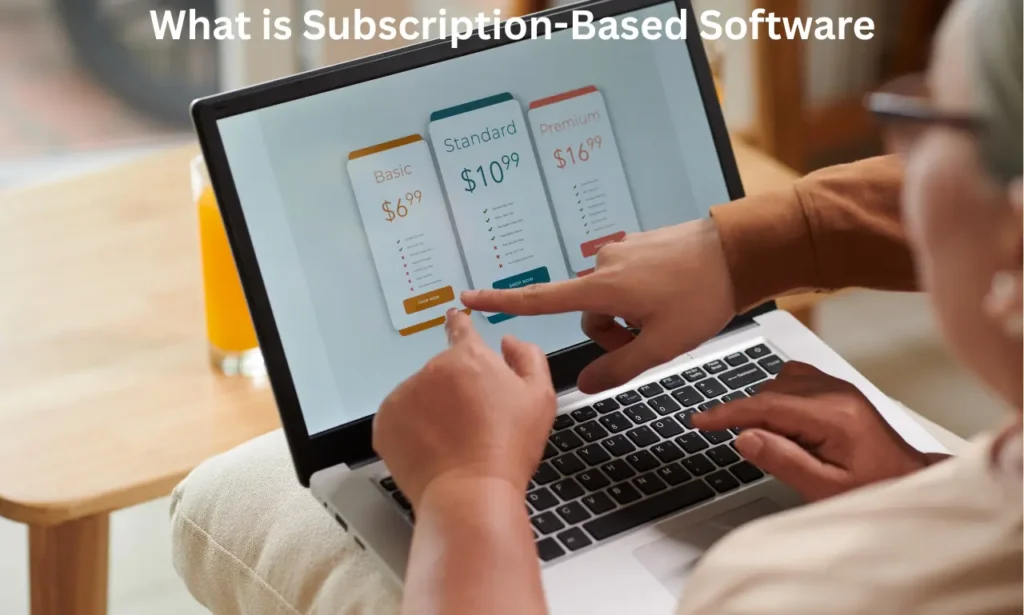
Tiered models offer multiple pricing levels with different feature sets. Zoom provides Basic free, Pro at $15 monthly, Business at $20 monthly, and Enterprise with custom pricing. Each tier solves different customer needs and budgets.
Slack structures tiers masterfully. The free version allows 90 days of message history. Pro at $8 per user monthly provides unlimited history plus advanced features. Business adds enhanced security and compliance tools. Enterprise gets dedicated support and advanced controls.
I upgraded from Slack Free to Pro when our message history exceeded 90 days. That constraint became painful fast. The $8 monthly per-user cost justified itself immediately by preserving critical conversation history and enabling powerful search capabilities.
Freemium to Premium Conversions
Freemium models give away basic functionality for free while charging for premium features. Spotify converted approximately 46 percent of free users to paid subscribers by 2022, making it one of the most successful freemium implementations ever built.
Dropbox pioneered this approach in cloud storage. Free accounts get 2GB of storage. Enough to understand the value, but insufficient for serious use. Paid plans start at $11.99 monthly for 2TB. The upgrade becomes obvious once you hit storage limits.
I started with Dropbox Free in 2011. Within six months, I needed more storage. The upgrade decision took thirty seconds. Free proved the concept. Paid became necessary for my workflow. This conversion funnel generates billions for freemium companies.
Major Industries Using Subscription Software
Software as a Service dominates subscription software adoption. The SaaS market doubled to reach $307 billion in 2024. Salesforce pioneered enterprise SaaS in 1999. Now companies like HubSpot, Zendesk, and Monday manage billions in subscription revenue.
Media and entertainment held a 40 percent market share in 2024. Netflix, Disney Plus, Hulu, and Apple TV Plus generate over $155 billion combined through streaming subscriptions. Spotify and Apple Music added another $30 billion in music subscription revenue.
I maintain six media subscriptions currently. Netflix for movies. Spotify for music. Audible for audiobooks. The New York Times for news. Medium for articles. YouTube Premium for ad-free videos. These monthly charges total $87 but provide thousands of hours of entertainment annually.
Education represents the fastest-growing subscription sector at 13.6 percent CAGR through 2032. Coursera, Udemy, MasterClass, and LinkedIn Learning all shifted to subscription access. Students pay monthly for unlimited course catalogs rather than buying individual classes.
The Economics Behind Subscription Software
Subscription software creates predictable recurring revenue that traditional licensing cannot match. Monthly Recurring Revenue and Annual Recurring Revenue become the primary metrics driving business decisions and company valuations.
Private SaaS companies trade at median valuations of 4.7 times revenue. Public software companies command 6.1 times revenue multiples. A company generating $10 million ARR might be valued at $47 million to $61 million purely based on subscription revenue predictability.
Customer Lifetime Value increases dramatically under subscription models. A customer paying $50 monthly for five years generates $3,000 total revenue. The same customer under perpetual licensing might pay $400 once and then never buy again. Subscriptions create 7.5x more revenue from identical customers.
I calculated this for my own SaaS business in 2020. Our average customer stayed subscribed for 31 months at $79 monthly. That generated $2,449 per customer lifetime value. We spent $380 acquiring each customer. The 6.4x ratio between LTV and CAC made our business incredibly profitable.
How Subscription Software Benefits Customers
Lower upfront costs make professional tools accessible to everyone. Adobe Photoshop previously cost $999 as a barrier to entry. Now, anyone can access it for $54.99 monthly. This democratization opened creative software to millions of new users globally.
I started graphic design work in 2015 with exactly $200 in my business account. Buying perpetual Photoshop was impossible. The $20 monthly Creative Cloud Photography plan gave me Photoshop and Lightroom immediately. Without subscriptions, I could never have started my design business.
Access from anywhere through cloud delivery transformed remote work. I access Microsoft 365 from my laptop, tablet, and phone seamlessly. Files sync automatically through OneDrive. Start a document on desktop, edit on mobile, finish on tablet. This flexibility was impossible with desktop-only perpetual software.
The Future of Subscription Software
Artificial intelligence integration accelerates rapidly across subscription platforms. Microsoft added Copilot AI to Microsoft 365 for a $30 monthly extra fee. Adobe integrated Firefly generative AI into Creative Cloud. Notion launched AI writing assistance. Every major subscription platform now includes AI features.Hybrid subscription models combining fixed and usage pricing are emerging increasingly. HubSpot charges base subscriptions plus additional fees for marketing contacts exceeding limits.
Salesforce bills platform access monthly, plus consumption charges for certain features. This hybrid approach optimizes revenue while providing flexibility. The subscription economy is projected to reach $1.5 trillion by 2033. Software and technology will drive much of this growth at a 15.8 percent annual expansion. Asia Pacific markets will grow fastest at 16.5 percent CAGR as internet penetration increases and digital transformation accelerates.
FAQS
What is the difference between subscription software and perpetual licenses?
Subscription software requires ongoing monthly or annual payments for continued access. Perpetual licenses involve one-time upfront payments that grant permanent usage rights. Subscriptions include automatic updates and cloud access. Perpetual licenses require manual updates and typically install locally on specific computers.
How much does subscription software typically cost compared to buying software outright?
Subscriptions cost less initially but more in the long term. Adobe Creative Cloud runs $659.88 annually versus $2,600 one-time for the old Creative Suite. Over five years, subscriptions cost $3,299 compared to $2,600 perpetual. The break-even point typically occurs between three and five years of continuous use.
Can I still use subscription software if I cancel my subscription?
Most subscription software becomes inaccessible after cancellation. Microsoft 365 switches to read-only mode. Adobe Creative Cloud applications stop working entirely. Some services, like Notion, allow viewing but not editing past content. Always export important data before canceling subscriptions to prevent losing access.
Why are software companies switching from one-time purchases to subscriptions?
Subscriptions generate predictable recurring revenue instead of volatile one-time sales. Companies receive ongoing income from existing customers rather than relying solely on new customer acquisition or version upgrades. This business model creates higher company valuations and more stable cash flow for operations.
What happens to my files if the subscription service shuts down?
You typically lose access to files stored in proprietary formats or cloud platforms. Always maintain local backups in standard file formats. Export data regularly to universal formats like PDF, CSV, or standard image types. Some services provide data export periods after shutdown, but this is not guaranteed.
Related reading
- What is SaaS Customer Lifetime Value?
- What Is the Freemium SaaS Model?
- How Free Trials Work in SaaS
- What is SaaS Unit Economics
- How SaaS Revenue is Calculated
- Case study: Meridian SaaS SEO
- Free tool: LTV:CAC Ratio Calculator
Frequently asked questions
What is subscription-based software?
It is software you pay for regularly, such as monthly or yearly, to keep access, instead of buying it once for a large upfront fee.
How is subscription software different from buying a license?
A license is a one-time purchase you own, while subscriptions give ongoing access with updates and support for a recurring fee.
Why do companies prefer the subscription model?
It provides steady recurring revenue, funds continuous updates, and lowers the entry cost for customers, encouraging more sign-ups.
Need a hand shipping this?
Our team builds high-traffic platforms for fintech, commerce and SaaS.
