Using Machine Learning for Business Insights
Machine learning is changing the way businesses make decisions. It helps companies analyze large amounts of data quickly and accurately. By finding patterns and trends, machine learning provides valuable insights. These insights help organizations…

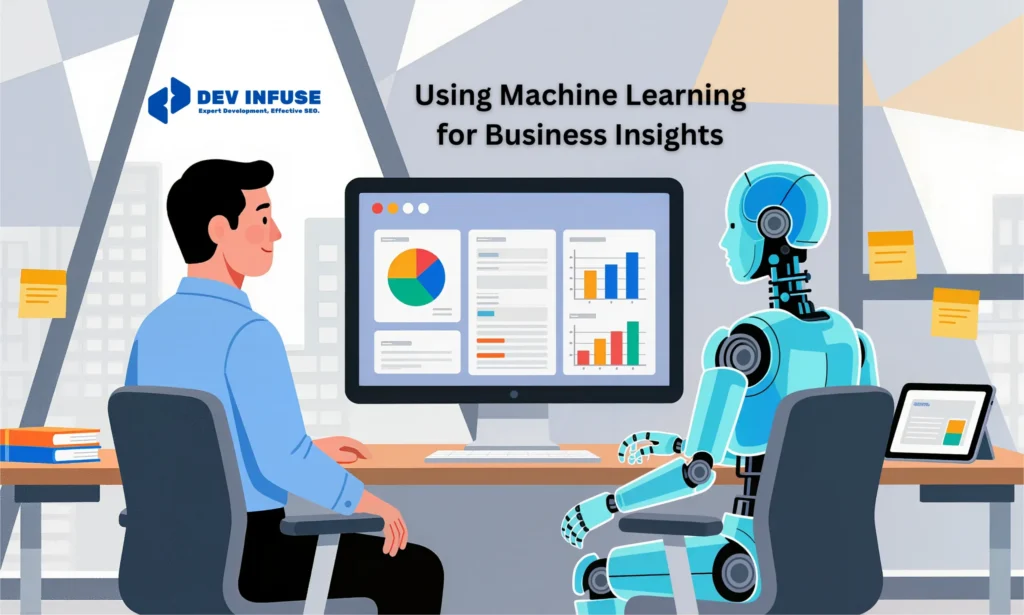
Machine learning is changing the way businesses make decisions. It helps companies analyze large amounts of data quickly and accurately. By finding patterns and trends, machine learning provides valuable insights. These insights help organizations understand customers, improve operations, and plan strategies. Businesses can use machine learning to predict outcomes and make smarter decisions.
Machine learning is useful across industries and business functions. It can forecast sales, detect risks, optimize supply chains, and improve customer experiences. With the right tools, even complex data becomes easier to understand. Companies can act faster, reduce errors, and gain a competitive advantage. Using machine learning for business insights allows teams to make decisions based on data rather than guesswork. It turns information into actionable knowledge that drives growth and efficiency.
Importance of Machine Learning for Business Insights
Machine learning helps businesses turn raw data into meaningful insights. It can analyze large datasets quickly and detect patterns humans might miss. These insights guide decision-making, improve strategy, and reveal new opportunities. By understanding trends and behaviors, companies can make more informed choices and reduce the risk of errors.
Machine learning also enhances efficiency and productivity. Repetitive data analysis can be automated, saving time and reducing human workload. Teams can focus on strategic tasks rather than manual data processing. Automation allows faster response to changes in the market, customer behavior, or operational performance, giving businesses a competitive edge.
Finally, machine learning supports personalization and customer understanding. By analyzing behavior and preferences, companies can tailor products, services, and marketing strategies. This leads to better customer experiences, higher satisfaction, and increased loyalty. Machine learning enables businesses to act proactively rather than reactively.
Key Applications of Machine Learning in Business
Machine learning is applied across many areas of business to provide valuable insights and improve decision-making. From understanding customers to optimizing operations, it helps organizations act faster, reduce risks, and improve efficiency. Here are some of the key applications that demonstrate its impact on modern business.
Customer Behavior Analysis
Machine learning helps businesses understand customer behavior by analyzing purchase patterns, browsing habits, and preferences. It can segment audiences, predict future actions, and recommend personalized offers. This allows companies to improve marketing strategies, enhance customer experiences, and increase engagement and loyalty by delivering products and messages tailored to individual needs.
Sales and Revenue Forecasting
Machine learning models can predict future sales and revenue trends based on historical data. By analyzing patterns, seasonal changes, and market factors, businesses can make accurate forecasts. This helps in planning inventory, setting realistic targets, and allocating resources effectively, ultimately improving profitability and reducing the risk of overstocking or missed opportunities.
Risk Management and Fraud Detection
Machine learning detects potential risks and fraudulent activity by identifying unusual patterns in transactions or operations. It helps businesses prevent financial losses, protect sensitive data, and maintain compliance with regulations. Real-time monitoring and predictive models allow organizations to act proactively, addressing issues before they escalate into major problems.
Supply Chain Optimization
Machine learning improves supply chain efficiency by predicting demand, managing inventory, and optimizing logistics. It analyzes data from suppliers, production, and sales to reduce delays, cut costs, and improve delivery performance. Businesses can make better decisions, respond quickly to changes, and ensure smooth operations across the entire supply chain.
Popular Machine Learning Tools for Business
Machine learning tools help businesses analyze data, build predictive models, and gain insights faster. They vary from beginner-friendly platforms to advanced frameworks for data scientists. Choosing the right tool depends on your team’s technical skills, business needs, and the type of insights you want to generate.
TensorFlow
TensorFlow is a widely used open-source library for building machine learning models. It supports deep learning, neural networks, and large-scale data analysis. TensorFlow is highly flexible and suitable for complex business applications, including image recognition, natural language processing, and predictive analytics. It is ideal for organizations with technical teams capable of building custom models.
scikit-learn
scikit-learn is a Python library that offers simple and efficient tools for data mining and analysis. It provides algorithms for classification, regression, clustering, and model evaluation. scikit-learn is user-friendly, making it suitable for beginners and analysts who want to quickly build predictive models without extensive coding knowledge.
Microsoft Azure Machine Learning
Azure Machine Learning is a cloud-based platform that allows businesses to build, train, and deploy machine learning models at scale. It supports automated machine learning, integration with other Microsoft tools, and real-time analytics. Azure ML is suitable for businesses of all sizes seeking scalable, enterprise-ready solutions.
IBM Watson
IBM Watson provides AI and machine learning services for business analytics, natural language processing, and predictive modeling. It offers cloud-based solutions that can be integrated with existing systems. Watson is particularly useful for companies looking to extract insights from large datasets and improve customer interactions or operational efficiency.
RapidMiner
RapidMiner is a low-code platform for data preparation, machine learning, and predictive analytics. It allows businesses to build models using visual workflows without extensive coding. RapidMiner is ideal for teams that want to implement machine learning quickly, focusing on business insights rather than technical complexities.
How to Choose the Right Machine Learning Tool for Your Business
Selecting the right machine learning tool is important for getting meaningful business insights. The right tool should match your team’s technical skills, business goals, and budget. Consider ease of use, scalability, integration options, and the type of insights you need. Evaluating these factors ensures the tool supports decision-making effectively.
Understand Your Business Goals
Start by defining your objectives. Do you want to forecast sales, analyze customer behavior, detect fraud, or optimize operations? Knowing your goals helps narrow down tools that focus on relevant applications. A clear understanding of business needs ensures you select a tool that provides actionable insights rather than unnecessary features.
Assess Technical Skills and Ease of Use
Some tools require coding expertise, while others offer drag-and-drop interfaces. Consider your team’s skills before choosing a tool. Easy-to-use platforms save time and reduce errors. They allow analysts or business users to work independently without relying entirely on technical experts.
Consider Scalability and Integration
The tool should scale with your business and integrate with existing systems. As data volume grows or new platforms are added, the tool must handle larger datasets without performance issues. Good integration ensures smooth workflows, consistent data, and accurate insights across all business functions.
Evaluate Cost and Support
Cost is an important factor, especially for small or growing businesses. Compare pricing models, including subscriptions, licenses, or cloud-based options. Also, check available support, tutorials, and community resources. Reliable support ensures issues are resolved quickly and your team can maximize the tool’s value.
Future Trends in Machine Learning for Business Insights
Machine learning is evolving rapidly, offering smarter and faster ways to extract business insights. Future trends will focus on automation, predictive analytics, integration with AI, and real-time decision-making. These developments will help organizations stay competitive and make data-driven decisions.
Increased Use of Predictive Analytics
Future machine learning applications will focus more on predicting outcomes rather than just analyzing past data. Businesses will rely on models to forecast sales, customer behavior, market trends, and operational performance. Predictive analytics will allow companies to plan proactively, optimize strategies, and make informed decisions before challenges arise.
Automation and Self-Learning Systems
Machine learning models will become more autonomous, improving accuracy without constant human input. Automated workflows will reduce manual data processing, streamline decision-making, and enable real-time insights. Businesses will benefit from faster analysis, less human error, and more efficient use of resources across departments.
Integration with AI and IoT
Machine learning will increasingly integrate with artificial intelligence and Internet of Things (IoT) devices. This combination will provide deeper insights from connected devices, customer interactions, and operational data. It will help companies optimize processes, enhance customer experiences, and respond dynamically to changing business environments.
Focus on Explainability and Transparency
As machine learning becomes central to decision-making, explainable AI (XAI) will gain importance. Businesses will need models that clearly show how decisions are made. Transparency will build trust, ensure compliance, and allow users to act confidently on insights generated by machine learning systems.
Conclusion
Machine learning is transforming how businesses analyze data and make decisions. It helps identify patterns, predict trends, and optimize operations. By turning complex data into actionable insights, companies can improve efficiency, reduce risks, and create better strategies. Machine learning allows businesses to respond faster and make decisions based on data rather than guesswork.
The future of business insights lies in predictive analytics, automation, and AI integration. Models will become smarter, more autonomous, and transparent. Overall, using machine learning for business insights helps organizations stay competitive, plan strategically, and unlock growth opportunities across all areas of operation.
Related reading
- Affordable Analytics Software for Small Companies
- Role of AI in Predictive Data Models
- Data Visualization Best Practices for Beginners
- Custom Dashboards for Business Intelligence
- Best Tools for Social Media Data Analytics
- Case study: Quanta ops dashboard
- Free tool: Website Maintenance Cost Calculator
Frequently asked questions
What is machine learning in business?
It is a form of AI that learns from data to find patterns and make predictions, helping companies gain insights and make smarter decisions.
How does machine learning provide business insights?
It analyzes large datasets quickly, uncovers trends and patterns, and predicts outcomes such as demand, churn, or fraud that guide decisions.
Do businesses need data scientists to use machine learning?
Not always. Many modern tools include machine learning features that let teams gain insights without deep technical expertise.
Need a hand shipping this?
Our team builds high-traffic platforms for fintech, commerce and SaaS.
